


Salt-Free Water Systems vs. Water Softeners: Understanding the Real Difference
If you’re researching solutions for hard water, you’ve likely come across both traditional water softeners and salt-free water systems. While they are often discussed as alternatives to one another, they actually work in very different ways.
Why a Salt-Free System Isn’t Actually a Water Softener
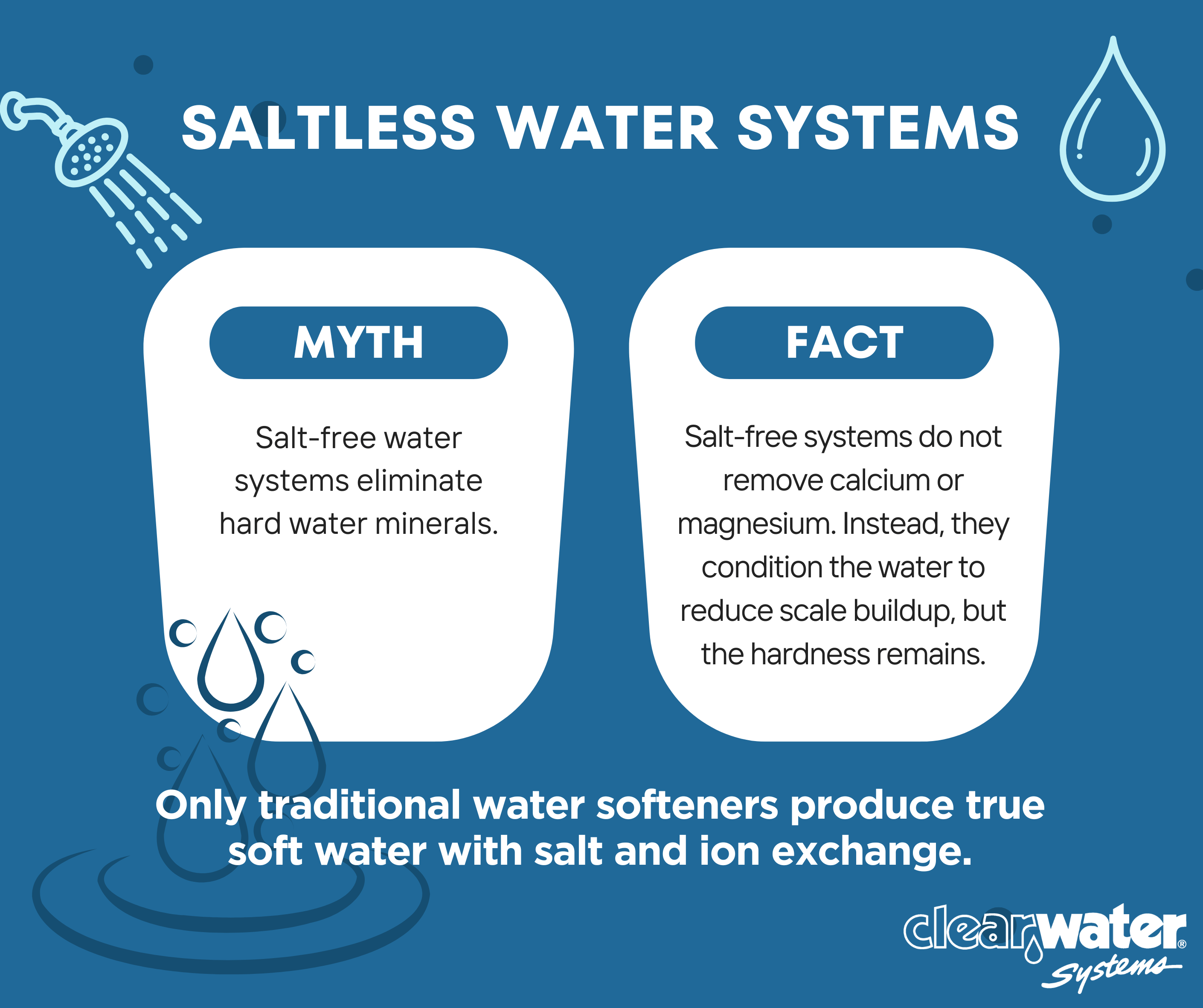
One of the most common misconceptions about salt-free water treatment systems is that they are water softeners. While the terms are sometimes used interchangeably, a salt-free system is more accurately described as a water conditioner, not a water softener.
The distinction is important because a true water softener removes hardness minerals from the water through ion exchange. Calcium and magnesium, the minerals responsible for hard water, are physically removed and replaced with sodium or potassium ions.
A salt-free conditioner does not remove these minerals. Instead, it alters the way the minerals behave in the water, helping to reduce their tendency to stick to plumbing surfaces and form scale deposits. The hardness minerals remain in the water, and the water retains its original hardness level.
Understanding this difference is essential when choosing the right solution for your home.
How Salt-Free Water Systems Work
Salt-free systems do not remove calcium and magnesium from the water. They condition the minerals so they are less likely to attach to plumbing surfaces and form scale deposits.
The minerals still remain in the water. The hardness level remains stays the same, and the water is not technically softened.
Instead, the system helps reduce the ability of hardness minerals to stick to pipes, fixtures, and appliances.
This can provide benefits such as:
- Reduced scale accumulation
- No salt additions
- No regeneration cycles
However, because the hardness minerals are still present, homeowners continue to experience some of the common symptoms of hard water, including spotting, soap scum, and the feel of hard water during bathing and cleaning.
How a Traditional Water Softener Works
A traditional water softener treats hard water through a process called ion exchange.
As water passes through the softener’s resin bed, calcium and magnesium ions are removed from the water and replaced with sodium or potassium ions. Because the hardness minerals are physically removed, the water is truly softened.
This process delivers several benefits:
- Eliminates hardness minerals
- Prevents scale buildup
- Improves soap and detergent performance
- Reduces spotting on dishes and fixtures
- Helps laundry feel softer
- Protects plumbing and appliances from mineral deposits
Because the hardness minerals are removed, homeowners notice immediate differences in how their water feels and how well soaps and cleaning products work.
In short, a water softener changes the composition of the water by removing the minerals responsible for hardness.
The Added Benefit of a Kinetico Premier XP® Water Softener
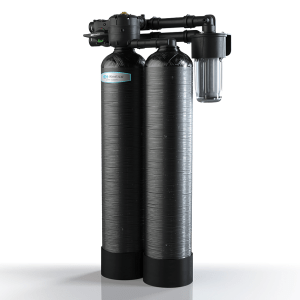
While all water softeners are designed to remove hardness minerals through ion exchange, not all systems are built the same. The Kinetico Premier XP Water Softener offers several advanced features that provide additional performance, efficiency, and reliability for homeowners.
Non-Electric Operation
Unlike many traditional water softeners that rely on electricity, the Kinetico Premier XP operates entirely on the kinetic energy of moving water. This non-electric design eliminates the need for computers, timers, motors, or circuit boards that can fail over time or require replacement.
By harnessing the power of your home’s water flow, the system delivers dependable operation while reducing energy consumption and minimizing maintenance concerns.
24/7 Continuous Soft Water
One of the most significant advantages of the Kinetico Premier XP is its twin-tank design.
Traditional single-tank softeners periodically enter a regeneration cycle, during which soft water may not be available. The Kinetico Premier XP operates differently. When the active tank becomes exhausted, the system automatically switches to a second tank that is already full of softening capacity. The first tank then regenerates using soft water before returning to service.
This means your home receives a continuous supply of soft water around the clock, without interruptions or periods where hard water can pass through the system.
Extra Precision (XP) Calibration
The Premier XP also features patent-pending Extra Precision (XP) calibration technology. This advanced capability allows the system to be finely tuned to the specific water conditions in your area.
By customizing operation to your home’s exact water chemistry and usage patterns, the system can maximize efficiency, helping reduce both salt and water consumption while maintaining optimal softening performance.
A Smarter Approach to Water Softening
When combined with the proven benefits of ion exchange softening, these advanced features make the Kinetico Premier XP more than just a water softener. It provides continuous soft water, exceptional efficiency, and reliable non-electric operation designed to deliver long-term value for homeowners looking to get the most from their water treatment system.
What Causes Hard Water?
Hard water contains dissolved minerals, primarily calcium and magnesium. As water moves through your plumbing system, these minerals can accumulate on surfaces, creating a hard, crusty buildup known as scale.
Over time, scale can:
- Reduce water heater efficiency
- Shorten appliance lifespan
- Restrict water flow in pipes
- Leave spots on dishes and fixtures
- Make cleaning more difficult
- Cause soap and detergents to perform poorly
The goal of any hard water treatment system is to address these issues—but different systems accomplish this in different ways.
Which System Is Right for Your Home?
When comparing water treatment options, it’s important to look beyond marketing terminology and focus on how the technology actually works.
A traditional water softener removes calcium and magnesium from your water, delivering true soft water throughout your home. A salt-free system leaves those minerals in place but helps reduce their ability to create scale deposits.
Understanding that distinction can help you choose the solution that best fits your home’s water conditions, maintenance preferences, and long-term goals.